Institute for Food and Transportation Law Established at Bremerhaven University of Applied Sciences
The LTRI brings together expertise in food science and logistics, which had previously been researched in separate departments
Advertisement


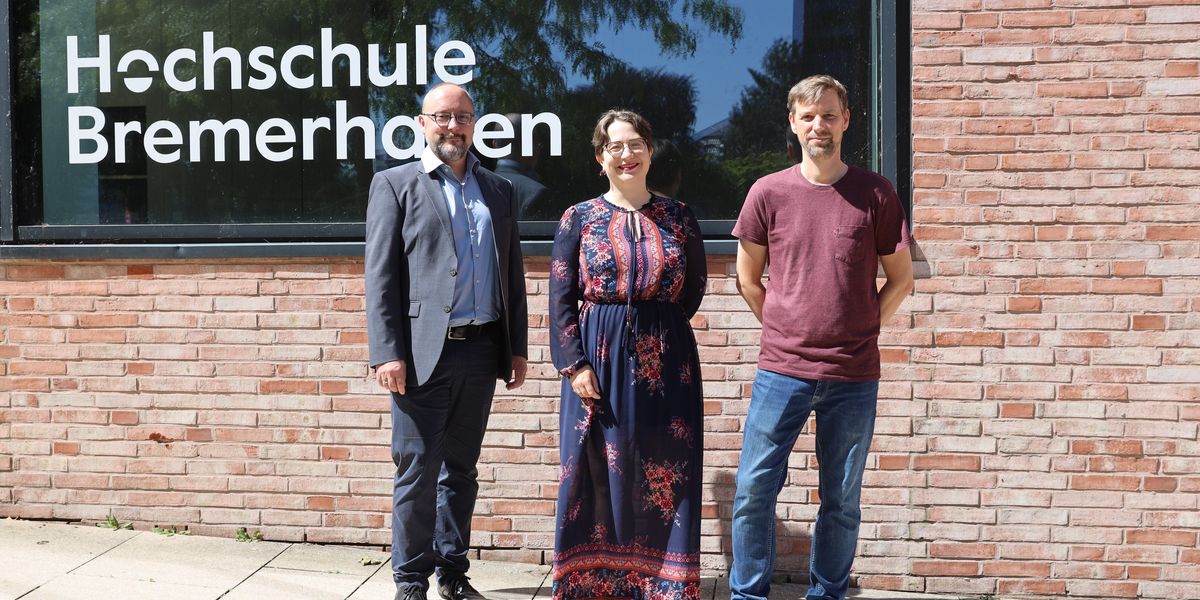
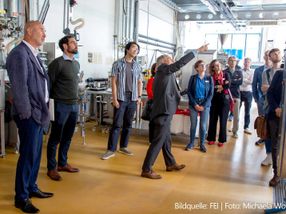
Presumably, everyone has heard this familiar parenting saying: “You eat what’s on the table!” Even though parents and grandparents probably meant it differently, the phrase shows that transportation and logistics are important issues in the food industry as well. The Institute for Food and Transportation Law (LTRI) has now been established at Bremerhaven University of Applied Sciences. The goal is to combine expertise from both fields in joint research projects.
Harnessing synergies—that was the stated goal when the Institute for Food and Transportation Law was founded. “Until now, the research and teaching areas of food science in Department 1 and transportation and logistics in Department 2 at our university have largely existed in isolation from one another. This is where the LTRI comes in: By pooling interdisciplinary expertise, it enables innovative solutions to the challenges of modern food supply and logistics,” says Prof. Dr.-Ing. Henning Strubelt, Professor of Warehouse Planning, Warehouse Technology & Warehouse Organization.
“In practice, these two fields are closely intertwined—for example, when it comes to sustainability, the digitization of supply chains, or food safety during transport. The solutions we’re aiming for across the entire supply chain would be virtually unthinkable without this collaborative approach,” adds Prof. Dr. jur. Tobias Eckardt, Professor of Law.
An initial research project has already been submitted to the HAW Research Priorities Program of the Federal Ministry of Research, Technology, and Space: The MAUS project aims to develop a supply-chain-wide concept for managing rodent pests in the food industry—from the farm to the supermarket. “The background to this is an upcoming ban on preventive baiting with anticoagulants (BUD), which, according to food industry associations, could substantially jeopardize compliance with hygiene requirements. The LTRI is currently collaborating with various large companies on the project. However, SMEs are also warmly welcome to participate in the planned field studies and roundtable discussions. The goal of MAUS is to develop supply-chain-wide guidelines for rodent control,” explains Prof. Dr. Deborah Wenk, professor of food chemistry in the Food Science program.
The timeliness and complexity of the issue are evident in a recent statement by the Federal Institute for Risk Analysis, which notes that an assessment of the actual general feasibility of implementation in practice has so far received virtually no consideration. The 22nd Conference of Ministers for Consumer Protection also placed effective and safe pest control on its agenda—in the interest of consumer health protection and food security—due to the discontinuation of the BUD.
Those interested in MAUS or the LTRI can contact the members Prof. Dr. jur. Tobias Eckardt, Prof. Dr.-Ing. Henning Strubelt, or Prof. Dr. rer. nat. Deborah Wenk.
Note: This article has been translated using a computer system without human intervention. LUMITOS offers these automatic translations to present a wider range of current news. Since this article has been translated with automatic translation, it is possible that it contains errors in vocabulary, syntax or grammar. The original article in German can be found here.


Other news from the department science














Most read news








More news from our other portals

















See the theme worlds for related content
Topic world Hygiene
Hygiene is the foundation of the food and beverage industry. Hygiene technology ensures that products are not only tasty, but most importantly, safe for consumption. From advanced cleaning processes to sterile filling techniques, the industry is constantly setting new standards to prevent contamination and the growth of microorganisms.

Topic world Hygiene
Hygiene is the foundation of the food and beverage industry. Hygiene technology ensures that products are not only tasty, but most importantly, safe for consumption. From advanced cleaning processes to sterile filling techniques, the industry is constantly setting new standards to prevent contamination and the growth of microorganisms.
Topic world Food safety
Food safety is at the heart of the food and beverage industry. It ensures that the food we eat every day is not only nutritious, but also free of harmful contaminants. From field to plate, the industry monitors and regulates every step of the process with strict quality controls, advanced testing methods and continuous research.

Topic world Food safety
Food safety is at the heart of the food and beverage industry. It ensures that the food we eat every day is not only nutritious, but also free of harmful contaminants. From field to plate, the industry monitors and regulates every step of the process with strict quality controls, advanced testing methods and continuous research.