Small Algae, Big Prospects for Cultured Meat
How Algae Can Help Reduce the Cost of Expensive Components in Cell Culture Media
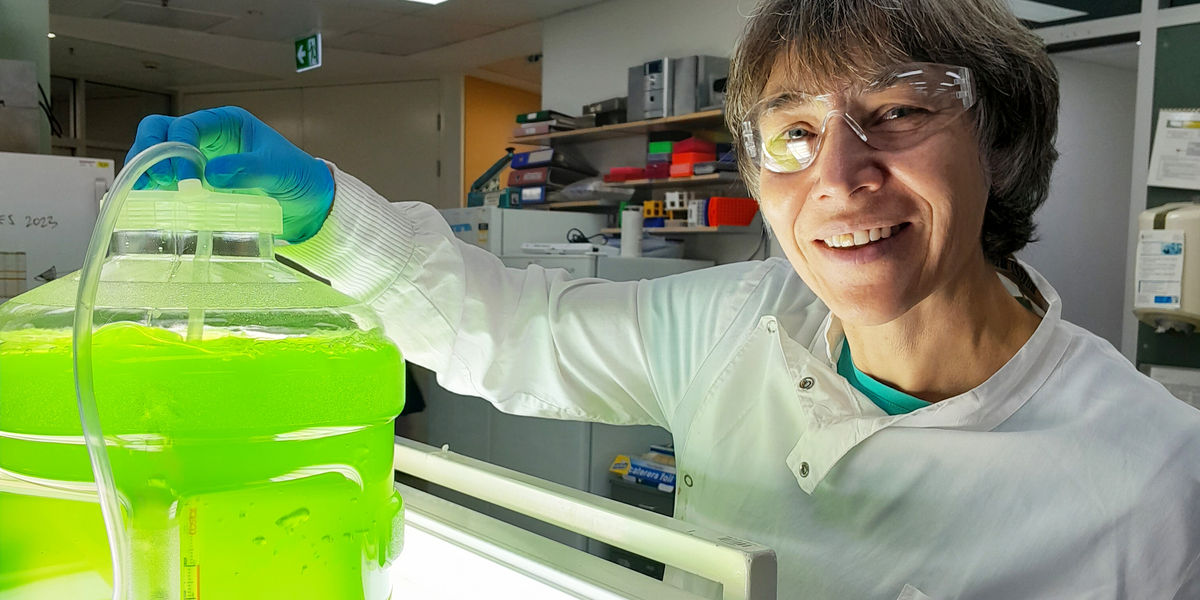
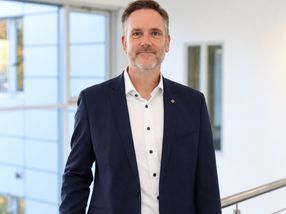
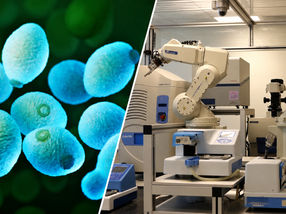
They are microscopically small and could play a surprisingly significant role in the development of cultured meat: microalgae. An international research group has investigated how the algae species Chlorella BDH-1 can help reduce the use of costly components in cell culture media and enable the circular use of resources. Professor Dr. Ute Marx from Pforzheim University is a co-author of the study. She made a significant contribution with her expertise in NMR spectroscopy, which allows for the analysis of the molecular composition of complex biological samples.
Cultured meat is produced from animal cells that are grown outside the animal in a nutrient-rich culture medium. Amino acids and serum, in particular, have so far made these media a significant cost factor. The researchers therefore took an unusual approach: They used spent cell culture medium to cultivate Chlorella BDH-1. From the resulting algal biomass, they extracted a solution derived from disrupted algal cells, which was then reused for the cultivation of animal cells.
The results are promising. The used cell culture medium could be reused multiple times for the cultivation of microalgae. After two such recycling cycles, a particularly large amount of algal biomass was obtained. Under certain conditions, the animal cells grew more than twice as well with the algal extract as they did in a conventional cell culture medium. Particularly interesting was the combination with so-called co-cultivation, in which microalgae and animal cells are cultivated together. This made it possible to reduce the amounts of added amino acids and serum—which, as key components of the cell culture medium, support cell growth—by 50 percent. At the same time, cell proliferation increased by about 40 percent. Using NMR spectroscopy, Ute Marx investigated which valuable nutrients are contained in the algal extract and which of these are actually taken up by the animal cells. The analyses provide insight into which components are important for cell growth and how the algal extract can be specifically used as an alternative to conventional components of cell culture media.
“What fascinates me about this research is that, using NMR spectroscopy, we can visualize which substances are present in the algal extract and which of these the cells actually absorb. This allows us to determine, step by step, which components are particularly important for cell growth,” explains Professor Dr. Ute Marx. “The combination of analytics, cell biology, and algal biotechnology opens up interesting prospects for more resource-efficient cell culture.” The research is also attracting international attention. The Australian Financial Review reported on the work being done at the University of Queensland and highlighted the potential of microalgae to make the production of cultured meat more economical. In Australia, work is already underway to scale up the research findings to larger production scales.
For Professor Dr. Ute Marx, the study represents another success of international collaboration. She works closely with the research group led by Professor Ben Hankamer (Director of the Center for Solar Biotechnology at the Institute for Molecular Bioscience) at the University of Queensland in Australia, of which Dr. Melanie Oey is also a member. This collaboration has already resulted in several peer-reviewed scientific publications. Dr. Oey, who is leading the project described here, was a guest at Pforzheim University in April, where she gave a lecture.
“Our joint research with Melanie Oey demonstrates just how fruitful our collaboration is. This exchange brings together different scientific perspectives and consistently provides new impetus for our research,” says Ute Marx. The long-standing collaboration with Professor Ben Hankamer’s research group facilitates continuous international exchange and combines diverse expertise in biotechnology, cell biology, and analytics.
The study provides an important foundation for further investigations into the technical scalability and economic viability of the approach. It shows that microalgae are not only of interest as a protein source but could also help utilize nutrients more efficiently in future cell culture systems.
The connection between cultured meat and medical technology is even closer: both fields use similar cell culture methods. Animal cells are propagated under controlled conditions and can be specifically engineered in bioreactors to form muscle and fat tissue. Comparable methods are used in regenerative medicine, for example in the development of skin and cartilage tissue or, in the future, in artificial organs. Despite their different goals, both fields benefit from each other’s research. In both cases, the aim is to optimally supply cells with nutrients under controlled conditions, to specifically control their growth, and to develop suitable methods for transferring findings from the laboratory to larger or more complex systems.
This research thus represents an approach that combines fundamental scientific principles with technological applications. It is precisely at this intersection that the medical technology program at Pforzheim University operates: Students learn to address biological and medical problems using engineering methods and to develop innovative solutions for the healthcare industry based on these approaches.
Note: This article has been translated using a computer system without human intervention. LUMITOS offers these automatic translations to present a wider range of current news. Since this article has been translated with automatic translation, it is possible that it contains errors in vocabulary, syntax or grammar. The original article in German can be found here.
Other news from the department science