Less variety due to seasonal products is accepted by the majority
Older people agree significantly more often
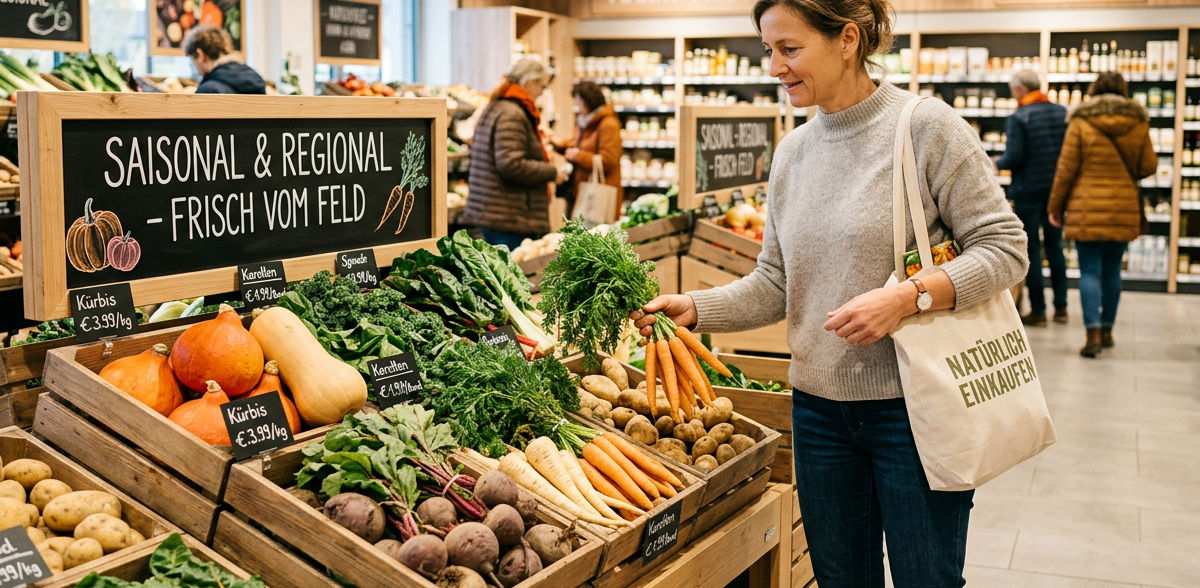
The majority of consumers in the DACH region do not perceive a seasonally reduced range of food as a restriction. Older people are much more likely to accept a reduced selection than younger people. In everyday life, consistent implementation often fails due to practical feasibility. This is shown by a recent study by the ZHAW.
Seasonality is an important point of orientation for many of those surveyed and is often taken into account when shopping. In everyday life, however, it becomes less binding - especially when entire meals are to be seasonal. Although knowledge about seasonal food is available, it is not enough on its own to consistently implement appropriate behavior. A total of 3,001 people from Germany, Austria and Switzerland took part in the survey in November 2025.
Openness to a smaller selection on the vegetable shelf
A more seasonal food range is viewed positively or neutrally by the majority. Many consumers are confident that they can cook a varied meal even with a limited selection. In a direct assessment, a clear majority even prefer a reduced selection in favor of seasonal and regional products. The decisive factor is suitability for everyday use: "People who know how to cook and plan with seasonal foods are much more likely to accept a smaller selection," says Pia Furchheim, head of the ZHAW study. The study also shows an age effect: older people are significantly more likely to accept a smaller selection of seasonal foods than younger people (87.6 percent of over 60-year-olds vs. 69.9 percent of 18 to 39-year-olds).
Clear orientation elementary for implementation in everyday life
For seasonal nutrition to become more firmly established, practical guidance in everyday life is needed above all. Respondents would like to see clear labeling of seasonal products, transparent communication in the event of unavailability and simple assistance for shopping and planning. The willingness to change is there - the decisive factor is how well seasonal nutrition can be implemented in everyday life. "This results in a clear mandate for retail and communication," says Furchheim, assessing the results.
Note: This article has been translated using a computer system without human intervention. LUMITOS offers these automatic translations to present a wider range of current news. Since this article has been translated with automatic translation, it is possible that it contains errors in vocabulary, syntax or grammar. The original article in German can be found here.

Other news from the department science