Eat less meat! Otto Gourmet founder in favor of regenerative agriculture
Why animal welfare and carbon footprint are not thought through far enough
"We need to drastically reduce the amount of meat we eat," says Otto Gourmet founder Stephan Otto. Wait a minute - one of the country's leading meat retailers is calling for less of his own product? Yes! And the entrepreneur is explicitly not just talking about a reduction in cheap products from factory farming. "If we want to eat meat that not only tastes good and nourishes us, but that has been produced fairly towards humans and animals and in harmony with nature, we have to rethink the whole concept of agriculture." Stephan Otto explains in an interview why this means doing without and which successful models give cause for hope.
What exactly do you mean when you talk about "rethinking agriculture"?
Stephan Otto: All food production has an impact on our planet, as it requires energy and resources. We must not only look at the climate, but also include components such as water, soil and the utilization of raw materials in circular economies. This is precisely where regenerative agriculture comes into play, as it goes far beyond the conventional concept of "sustainability". It restores natural cycles and thus improves soils, climate and biodiversity.
What does that mean in concrete terms?
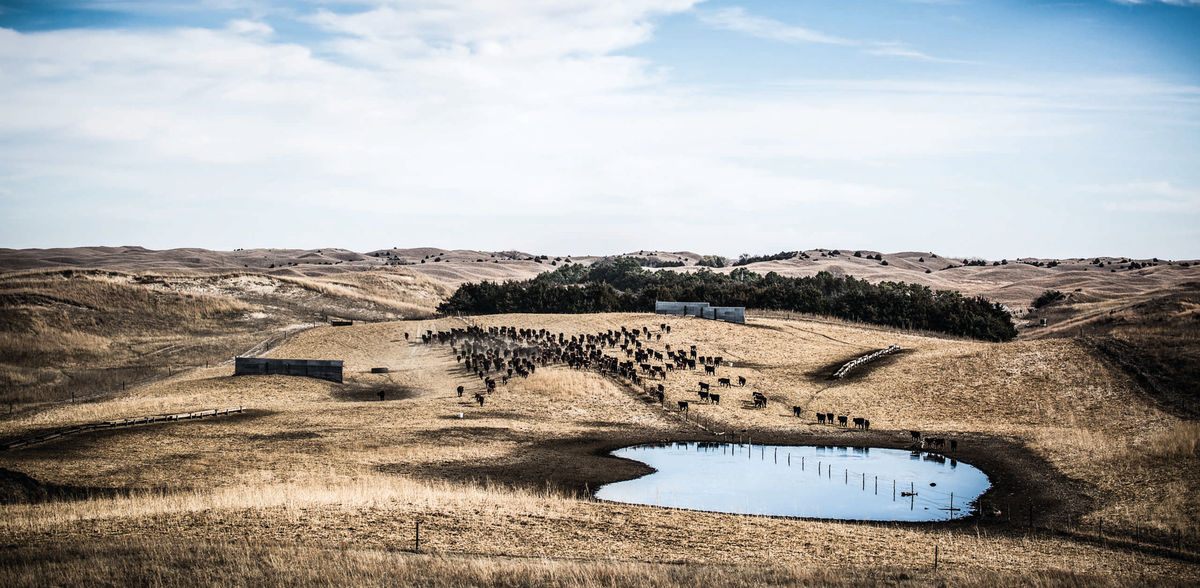
Very briefly, it means, for example, that instead of being kept in industrial fattening systems with high CO₂ emissions, animals are regularly moved to new areas in grazing systems. In addition to the obvious animal welfare factor, this has various other advantages. Allan Savory is a pioneer in this field. The scientist from Zimbabwe has shown that rotational grazing can even revitalize soils that are already severely degraded.
How does it work?
By moving large herds over changing areas, plants are grazed regularly but not destructively. The animals' excrement and the breaking up of the soil by hooves promote water retention, increase soil fertility and stimulate the growth of deep-rooted grasses. These in turn bind between six and nine tons of CO₂ per hectare in the soil.
Currently, around 40 percent of the earth's surface is threatened by desertification or silting. The fact that this development can be reversed through the form of cultivation is great news in the fight against the climate crisis. Studies show: Meat from this type of farming can even have a negative CO₂ balance and therefore have a positive impact on the climate.
So imported meat is not fundamentally bad?
Many people think that transportation is the CO₂ driver, but husbandry and nutrition have a much greater impact on an animal's "footprint". A cow from the USA or Canada, for example, has an average output of 12 to 13 CO₂ equivalents per kilogram of carcass weight due to the virtual absence of stalls and the grasslands outside. In Germany, the figure is 23 and in Spain as high as 35. Transport is only responsible for a fraction of this, an average of 0.2 CO₂ equivalents per kilogram of carcass weight.
Are there examples where regenerative agriculture is being successfully implemented?
Yes, for example at White Oak Pastures Farm in the US state of Georgia. There, the switch to regenerative grazing has not only improved the greenhouse gas balance of cattle farming, but turned it negative - every kilogram of beef removes net CO₂ from the atmosphere. Veterinarian Dr. Viviane Theby has also observed better soil quality, healthier animals and less dependence on purchased feed on her farm in the Eifel region since she changed her farming methods.
You mentioned animal welfare. What exactly does this term mean to you?
I could go on for hours about this topic (laughs). But in a nutshell, animal welfare for us at Otto Gourmet means that the animals have the opportunity to pursue their natural instincts, such as rooting, wallowing and pecking, in an environment that comes closest to their natural habitat. Sufficient space to move and rest, daylight and opportunities for activity are very important, and grazing animals such as cattle and sheep should spend the majority of their lives on pasture.
What are the benefits of regenerative agriculture?
Regenerative agriculture with animals can make a significant contribution to preserving our planet. This includes the climatic living conditions, healthy soils and biodiversity that serve our nutrition and well-being.
What hurdles do you see on the way there?
Space is clearly a limiting factor; after all, not every farm has the opportunity to constantly move its animals across different pastures. And this is exactly where my thesis comes in, that we first have to reduce our meat consumption in order to get back on a healthy path.
How exactly do you mean that?
In the short term, switching to organic or regenerative agriculture will result in significantly lower productivity and therefore a reduced supply. It will therefore not be possible to avoid a certain form of moderation. To get an idea of "lower supply": For the years 2011 to 2021, the yield per hectare for organic wheat, as opposed to conventional wheat, was less than 50 percent.
So why shouldn't we do without meat altogether?
Certain nutrients such as iron, zinc, selenium, B vitamins and essential amino acids, which the human body cannot produce itself, are only found in animal products such as meat, milk or eggs. Of course you can supplement, but in principle the amino acid pattern of animal proteins is more similar to the human requirement pattern. In other words, animals "recycle" food that cannot be used by humans and make this nutrient supply available to us.
Apart from the fact that the world's population cannot be fed without economically viable livestock, we also need them to maintain the soil. Without grazing livestock, the prairies become silted up and can no longer bind CO₂, which would be catastrophic for our ecosystems.
What contribution do you personally make at Otto Gourmet?
We take a very close look at the breeders and producers we work with and carefully decide whose philosophy and focus really suits us. It is important to us that the animals find ideal natural conditions, have plenty of exercise and, if possible, graze all year round. The feed should be perfectly tailored to their needs and we consistently refrain from giving them growth hormones or preventative antibiotics.
When it comes to processing, we attach great importance to short transportation routes and stress-free, professional slaughter. The optimum slaughter age also plays an important role, as only an animal that is slowly growing up and fully grown will develop the right marbling and a balanced flavor. All our products are 100 percent traceable, which gives our customers maximum security in terms of origin, husbandry and processing.
Dan Morgan from Morgen Ranch in the US state of Nebraska has been our partner from the very beginning, and he sums it up well: "The key skill of a good breeder is to work with the environment and not against it. After all, we are leaving our environment to future generations."
A final word?
Regenerative agriculture shows that meat production does not necessarily exacerbate climate and environmental problems. On the contrary - if animals are kept in harmony with natural cycles, they can contribute to the solution.
Note: This article has been translated using a computer system without human intervention. LUMITOS offers these automatic translations to present a wider range of current news. Since this article has been translated with automatic translation, it is possible that it contains errors in vocabulary, syntax or grammar. The original article in German can be found here.
Other news from the department business & finance