Vineyards Under Climate Stress: Research Opens New Paths for Viticulture
Climate Adaptation in Vineyards: Mountainous Regions Need Their Own Strategies
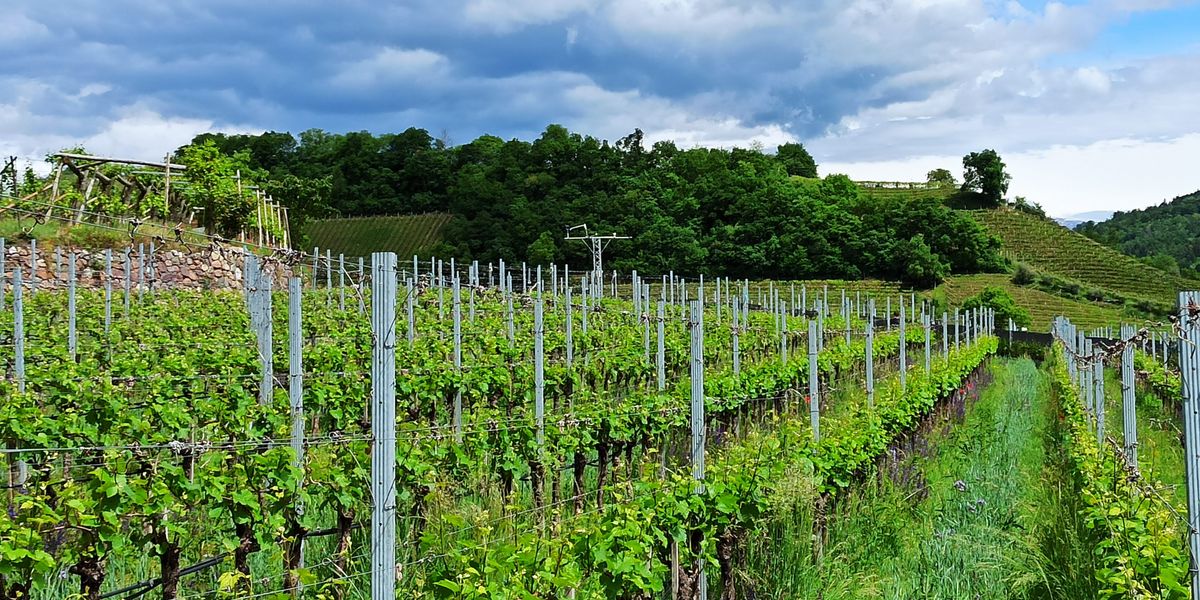
Two studies by the Free University of Bolzano show how grape ripening and water supply in mountain vineyards can be managed. Promising approaches include targeted irrigation, the selection of climate-resilient grape varieties, and measures to delay grape ripening.
Viticulture, too, is not spared from the effects of climate change. Rising temperatures lead to premature grape ripening, while increasingly frequent dry spells subject the vines to water stress. As a result, it is becoming increasingly difficult for vineyards to maintain the quality of their grapes and the character of their wines under changing climatic conditions.
The Research Group for Tree Ecophysiology at the Faculty of Agricultural, Environmental, and Food Sciences at the Free University of Bozen-Bolzano has been studying the effects of climate change on mountain viticulture for years. The focus is on grape ripening and water availability. The latest findings provide concrete approaches for how viticulture can adapt to the changing conditions.
The Unique Characteristics of South Tyrol
South Tyrol offers unique conditions for viticulture: Many vineyards are located on sunny slopes with soils that have limited water-holding capacity. Although rainfall is relatively frequent compared to many other European wine-growing regions, even a few days of intense heat can put the vines under water stress.
“Many of the adaptation strategies developed in recent years originate from significantly warmer and drier wine-growing regions,” explains Carlo Andreotti, professor of fruit and viticulture at the Free University of Bozen-Bolzano and coordinator of the research. “Our goal was to find out whether these measures are also effective in mountain vineyards, where climatic and soil conditions present entirely different challenges.”
One of the most noticeable consequences of climate change is premature grape ripening. The grapes accumulate sugar more quickly while simultaneously losing acidity. This poses the risk of higher alcohol content and a less balanced flavor profile—especially in white wines.
As part of their research, the scientists tested various measures to slow down the ripening process. The use of an antiperspirant based on pinolene—a natural active ingredient derived from pine resin—proved particularly promising. When applied to the vine leaves, it temporarily reduces photosynthetic activity and delays grape ripening by about ten days. This gives winemakers additional flexibility in choosing the optimal harvest time.
However, the study also points to a limitation that has received little attention to date: In mountain vineyards, frequent summer rainfall can significantly reduce the effectiveness of such treatments, as the active ingredient is repeatedly washed away. This shows that adaptation measures must always be tailored to the specific site conditions.
The Harvest Time Is Crucial
Another focus of the research was the question of how drought affects two of South Tyrol’s most commonly grown white wine varieties—Sauvignon Blanc and Chardonnay. The results show that the timing of water stress is particularly crucial: If water shortage occurs immediately after flowering or during the early stages of berry development, the yield losses are more severe than in the case of a water shortage—even a more severe one—during later stages of ripening.
At the same time, it became clear that the grape varieties react differently to drought. While Sauvignon Blanc proved to be particularly sensitive to drought, Chardonnay proved to be significantly less sensitive. Consequently, the choice of grape variety will also play an increasingly important role in the future when adapting to changing climatic conditions.
What does this mean for viticulture?
Concrete recommendations for viticulture can be derived from the two studies: The water balance of the soil and the vine should be continuously monitored using sensors that are already available, in order to tailor irrigation specifically to the vine’s particularly sensitive developmental stages. Equally important are the selection of resilient grape varieties and cultivation practices adapted to local conditions, which allow for the targeted delay of grape ripening.
“Our research shows that there is no one-size-fits-all solution,” summarizes Damiano Zanotelli, professor of fruit growing at the Free University of Bozen-Bolzano and co-author of both studies. “Adapting to climate change will only succeed if various measures are sensibly combined and tailored to the characteristics of the respective vineyard—such as soil conditions, grape variety, rootstock, or training system. Only in this way can the quality of the wines and their close connection to their region of origin be preserved in the future.”
Note: This article has been translated using a computer system without human intervention. LUMITOS offers these automatic translations to present a wider range of current news. Since this article has been translated with automatic translation, it is possible that it contains errors in vocabulary, syntax or grammar. The original article in German can be found here.

Other news from the department science