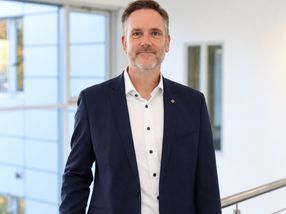
IGZ researcher Dr. Oliver Körner receives a STIAS Fellowship for sustainable food systems in Africa
The five-person international team brings together expertise in aquaponics, aquaculture, and system modeling from five countries

IGZ research group leader Dr Oliver Körner, together with an international research team, has been selected for a Team Fellowship at the Stellenbosch Institute for Advanced Study (STIAS) in South Africa. In the first half of 2027, the five-member team will conduct joint research under the title “An interdisciplinary international approach for sustainable and viable food production systems for Africa”, focusing on concepts for sustainable food production systems adapted to regional conditions.
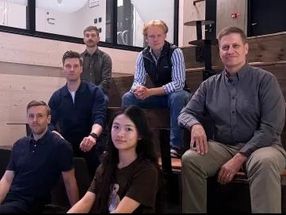
The fellowship brings together researchers from five countries and various disciplines. Alongside Oliver Körner from the Leibniz Institute of Horticultural Sciences (IGZ) in Germany, the core team comprises Alyssa Joyce from the University of Gothenburg (Sweden), Erick Ogello from Maseno University (Kenya), Maryam El Bakali from Abdelmalek Essaâdi University (Morocco) and Khalid Salie from Stellenbosch University (South Africa).
The joint work focuses on the question of how resource-efficient and climate-resilient production systems can be further developed for South African conditions. In doing so, the team combines expertise in aquaculture, aquaponics, plant production, controlled environment agriculture, system modelling and resource management.
“The great strength of our team lies in the fact that we bring together very different specialist and regional perspectives. Our aim is to develop a toolbox for planning sustainable production systems specifically tailored to regional conditions. The focus is on aquaponics, bioponics and the integrated production systems developed from them. Using a limited selection of suitable and available materials, the aim is to plan, model and evaluate site- and crop-specific systems,” says Dr Oliver Körner.
The fellowship builds on many years of international collaboration, which was established and further developed in the “BLUECYCLING” and “AquaponicsOpti” research projects.
“What makes this format special is that we can work together on site over an extended period. This gives us the opportunity to truly bring our different approaches together and to develop new joint concepts and research approaches based on our previous collaboration,” summarises Dr Oliver Körner.
A workshop planned for January 2027 will bring together not only the Fellowship team but also other international and South African experts from academia and industry. In addition to the technical design of the production systems, the focus is on the question of how these can be designed to be sustainable and economically viable under different site conditions.
Note: This article has been translated using a computer system without human intervention. LUMITOS offers these automatic translations to present a wider range of current news. Since this article has been translated with automatic translation, it is possible that it contains errors in vocabulary, syntax or grammar. The original article in German can be found here.
Other news from the department science