Good Honey Harvest Despite a Difficult Summer
39.5 kg per bee colony breaks the previous record. However, the number of colonies is declining, and the summer caused wildflower meadows to dry up in many places
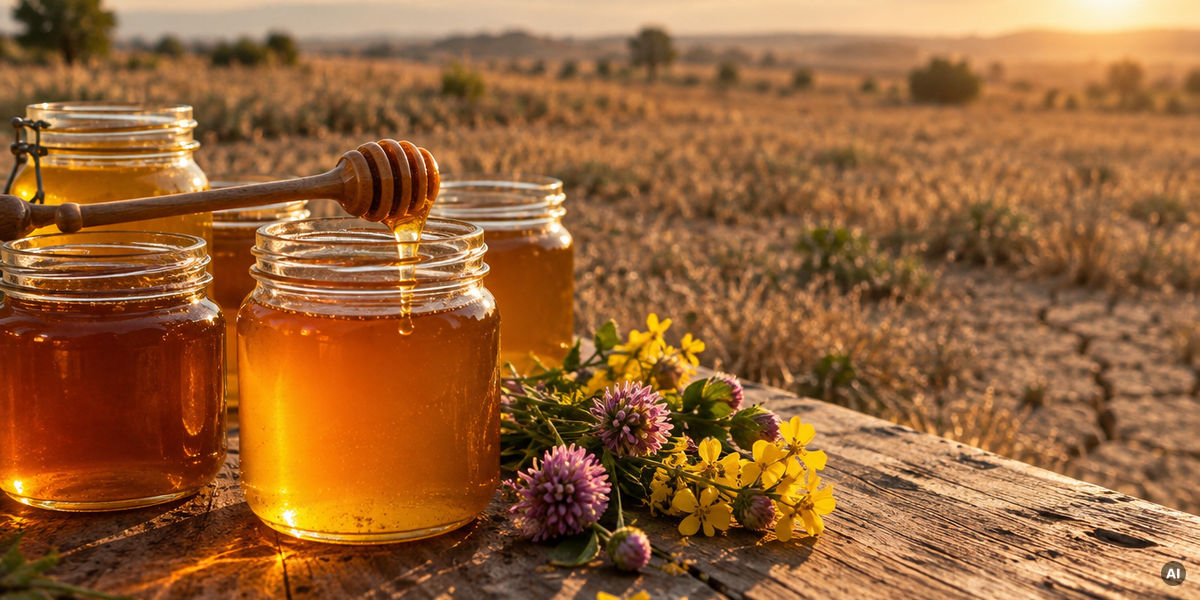
The current harvest figures sound encouraging. However, they should not obscure the fact that the number of bee colonies is declining and that climate change is posing increasing challenges to beekeeping.
At 39.5 kg of honey per hive, this year’s harvest in Germany is one of the best on record. It even surpasses the previous record set in 2025. Yields were above the national average, particularly in northern and eastern Germany, especially in regions dominated by rapeseed cultivation. In Mecklenburg-Western Pomerania and Schleswig-Holstein, an average of 28 kg of honey per colony was harvested in the spring—in Baden-Württemberg, the figure was 10 kg less.
These regional differences have a negative impact on the overall balance, as significantly more bee colonies are kept in southern Germany than in the north. At the same time, the number of bee colonies has been declining for several years.
However, the good harvest results should not obscure the fact that beekeeping, too, faces major challenges due to climate change. While the heavy rain in the spring allowed vegetation to sprout luxuriantly, a different picture emerged in the summer. Where lush clover meadows once bloomed, in many places there were now only dusty, brown patches. In some areas, the supply of nectar and pollen collapsed. This made it more difficult to raise winter bees and thus to prepare the colonies for the winter.
Furthermore, it is becoming increasingly difficult for beekeepers to harvest varietal honeys, as the flowering periods of important nectar and honeydew sources are overlapping more and more frequently. Since honey is a purely natural product, its flavor depends primarily on the plant species that the bees visit.
The German Beekeepers’ Association is therefore calling on policymakers to take more vigorous action against climate change. This includes the expanded development of climate-friendly energy production, such as through wind power and solar energy.
Note: This article has been translated using a computer system without human intervention. LUMITOS offers these automatic translations to present a wider range of current news. Since this article has been translated with automatic translation, it is possible that it contains errors in vocabulary, syntax or grammar. The original article in German can be found here.
Other news from the department business & finance