Food Industry Launches Joint Roadmap for Greater Biodiversity
Food for Biodiversity Publishes Rollout Strategy with Mandatory Quotas for Supply Chains Through 2030 and 2040
Advertisement


- Food for biodiversity e.V. has published its rollout strategy for implementing biodiversity criteria for farming in temperate regions.
- For the first time, the strategy defines common implementation goals for companies and standards organizations to promote biodiversity in agricultural supply chains.
- The focus is on seven high-risk commodity groups: vegetables, fruits, wheat, canola, sugar beets, milk, and meat.
Bonn/Brussels, October 6, 2026: The members of Food for Biodiversity have adopted a joint roadmap for greater biodiversity in agricultural supply chains, the “Strategy for the Rollout of the Basic Set for Temperate Regions for the Promotion of Biodiversity in the Food and Beverage Sector.” The rollout strategy is intended to help embed biodiversity criteria more firmly in the requirements of sustainability standards as well as in the procurement guidelines of food companies.
It is based on the Basic Set of Biodiversity Criteria for Temperate Regions, which was developed by Food for Biodiversity in collaboration with food companies, standards organizations, environmental organizations, and the scientific community. It brings together key requirements for the protection and promotion of biodiversity in agricultural production. The Basic Set serves as a common framework for companies and standards organizations. The rollout strategy and the further development of the Basic Set are part of the EU LIFE project “Fit for Biodiversity.”
“Five years after its founding, Food for Biodiversity has gained a foothold in the food industry,” says Peter Zens, chairman of Food for Biodiversity. “With the adoption of the rollout strategy, we are charting a course for systematically incorporating biodiversity criteria into the procurement processes of food companies. Among other things, this will lead to the creation and better protection of more natural habitats and the improvement of agricultural practices.”
Specific Goals for Phased Implementation
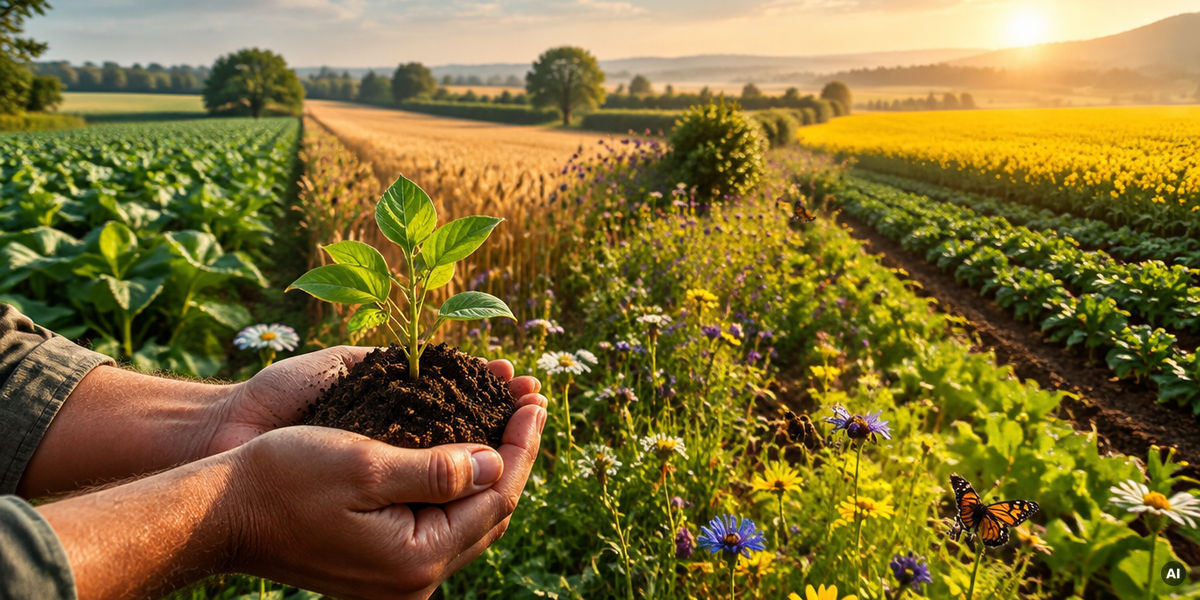
Implementation focuses on seven high-risk agricultural commodity groups in temperate regions: vegetables, fruits, wheat, canola, sugar beets, milk, and meat. For the phased rollout, companies can initially prioritize which commodity groups to start with based on their procurement structures and the complexity of their supply chains.
All members of the association support the strategy. Standards organizations and companies play a special role in implementing the roll-out strategy for temperate regions.
By 2030, the strategy calls for implementing the biodiversity criteria of the baseline set for at least two of the seven high-risk commodity groups. The target is at least 85 percent of the procurement volume of the selected commodity group for private-label products. The procurement volume may include fresh products, juices, canned goods, convenience foods, etc., and is determined by the company. By 2040, the application is to be gradually expanded to all seven high-risk raw material groups. Food for Biodiversity documents and monitors the implementation of the rollout strategy.
Standards organizations play a central role in implementation. Food for Biodiversity recommends standards that cover at least 70 percent of the criteria in the baseline set relevant to them. Companies can use these standards in their procurement to meet the requirements of the baseline set and thereby implement the rollout strategy. Within five years, the alignment of the standards with the baseline set is expected to increase to at least 90 percent.
About Fit for Biodiversity – the Project
The EU LIFE project Fit for Biodiversity – Biodiversity Governance and Performance in the Food Sector aims to improve biodiversity performance in the food sector and develop effective strategies for protecting ecosystems. Fit for Biodiversity supports companies in the agri-food sector in identifying biodiversity risks, implementing effective measures, and systematically integrating biodiversity into corporate and supply chain strategies.
The project is co-funded by the European Union’s LIFE program, the German Federal Environmental Foundation (DBU), the Baden-Württemberg Ministry of Food, Rural Affairs, and Consumer Protection, Rentenbank, the Postcode Lottery, and premium partners Nestlé Germany, EDEKA, and Lidl. Learn more about the Fit for Biodiversity project
About Food for Biodiversity
Food for Biodiversity was founded in 2021. Since then, the association has been committed to protecting biodiversity and contributing to the transformation of food systems toward sustainable and future-proof systems. Food for Biodiversity currently has 36 members from various areas of the food sector: food industry companies, environmental organizations, standards organizations, and scientific organizations. Learn more about Food for Biodiversity
About the Global Nature Fund
The Global Nature Fund (GNF) was founded in Radolfzell in 1998 to advocate for the global protection of lakes and wetlands. Today, the GNF works in the areas of nature conservation, international development, and business & biodiversity. The GNF is strongly committed to insect conservation and biodiversity and promotes environmentally friendly practices. The GNF is responsible for coordination in the EU LIFE project “Fit for Biodiversity.” Learn more about the Global Nature Fund
Note: This article has been translated using a computer system without human intervention. LUMITOS offers these automatic translations to present a wider range of current news. Since this article has been translated with automatic translation, it is possible that it contains errors in vocabulary, syntax or grammar. The original article in German can be found here.



Other news from the department politics & laws