Central Association: Three-Hour Rule for Sunday Work in Bakeries Is Not Enough
The baking trade is calling for inclusion in the list of exceptions under Section 10 of the Working Hours Act for up to eight hours of production
Advertisement


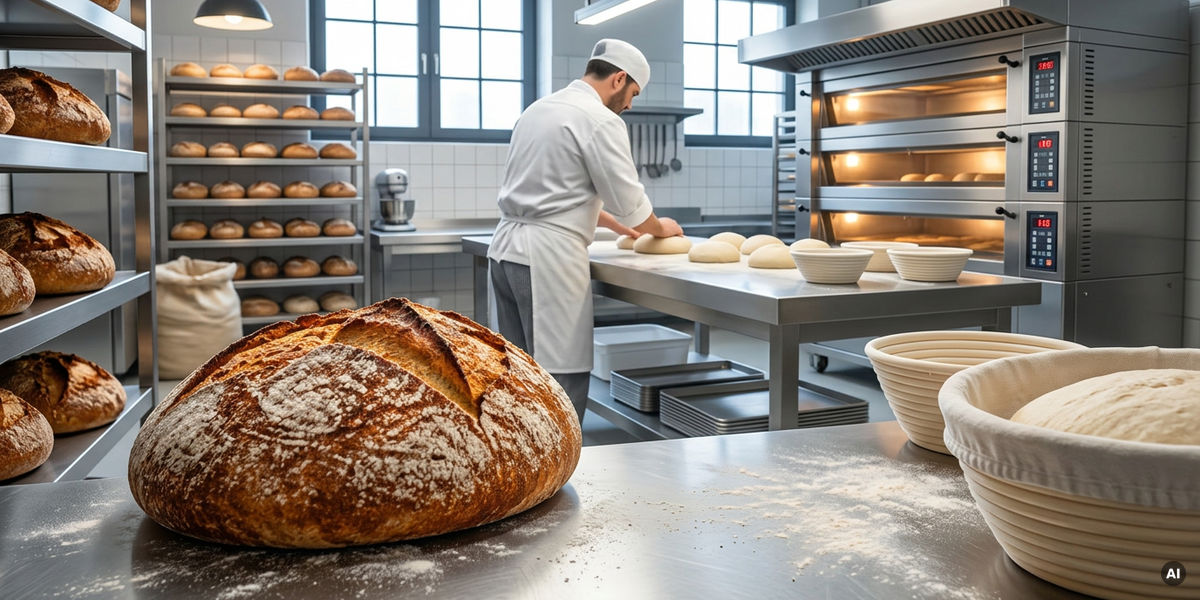
Bread for tomorrow is baked today. In a resolution, the Central Association of German Bakers is calling for the baking trade to be included in the list of exceptions under the Working Hours Act, in order to allow for legally compliant baking on Sundays and holidays for up to eight hours. This was clearly agreed upon in the coalition agreement and must now finally be implemented without any new additional restrictions. Labor Minister Alexander Schweitzer must act now—and must not water down the coalition’s promise with new restrictions.
The baking trade is increasing pressure on the federal government: With a resolution unanimously adopted by its general assembly, the Central Association of the German Baking Trade is calling for the swift implementation of the coalition’s promise regarding work on Sundays and public holidays. As announced, the baking trade is to be included in the list of exceptions under Section 10(1) of the Working Hours Act as of January 1, 2027—without any additional industry-specific restrictions. “Federal Labor Minister Schweitzer must deliver now. The agreement in the coalition agreement on this matter is clear and not an end in itself—it must now be implemented swiftly and take effect in bakeries. We need a regulation that works, not new hurdles that ultimately do little to help businesses,” explains Roland Ermer, President of the Central Association of the German Baking Trade. It is neither understandable nor acceptable any longer that no draft bill has yet been presented to implement the coalition agreement, Ermer continues.
Three hours aren’t enough for the bakery—tomorrow’s bread is baked today
Fresh baked goods for Sunday and the following days aren’t produced at the push of a button. Bread and baked goods that are supposed to be on store shelves on Monday or the day after a holiday, for example, are often prepared the day before. This includes preparing dough, making sourdough starter, and other production steps. However, the current regulation limits work on Sundays and holidays in bakeries and pastry shops—for the production and delivery of baked goods sold on the same day—to three hours. For many artisanal bakeries, this time window is too narrow to reliably organize the processes for the day of sale and preparations for the following day. This does not align with the actual production processes of many artisanal bakeries and creates legal uncertainty regarding necessary preparatory work for the following day. The new regulation would also benefit employees, as they could benefit significantly more from Sunday and holiday pay premiums.
Out of the Legal Gray Area
The Central Association therefore calls for the baking trade to be swiftly included in the list of exceptions without any additional industry-specific restrictions. From the Central Association’s perspective, it falls short if necessary preparatory work for the following day continues to lack clear legal certainty. Businesses need clear legal guidelines instead of a gray area in labor law.
“Bakers want to bake bread, not spend every Sunday sorting out legal gray areas. We want to get out of the gray area and into legal certainty. We don’t want a reform with the handbrake on. Instead, the new regulations must realistically reflect business operations,” Ermer sums it up.
With this resolution, the association is sending a clear message: The announced new regulations must be in place in time for January 1, 2027, and must work in practical business settings. Artisan bakeries ensure the regional supply of bread and baked goods—a staple food—to the population and preserve German bread culture. To ensure they can continue to fulfill this role reliably in the future, they need a dependable legal framework and must be included in the list of exceptions under Section 10(1) of the Working Hours Act.
Note: This article has been translated using a computer system without human intervention. LUMITOS offers these automatic translations to present a wider range of current news. Since this article has been translated with automatic translation, it is possible that it contains errors in vocabulary, syntax or grammar. The original article in German can be found here.


Other news from the department politics & laws