EU Packaging Regulation: What Will Change for Food Packaging Starting in 2026
PFAS limits, bans on empty containers, mandatory deposit system: TÜV SÜD explains the most important new regulations under the PPWR
Advertisement


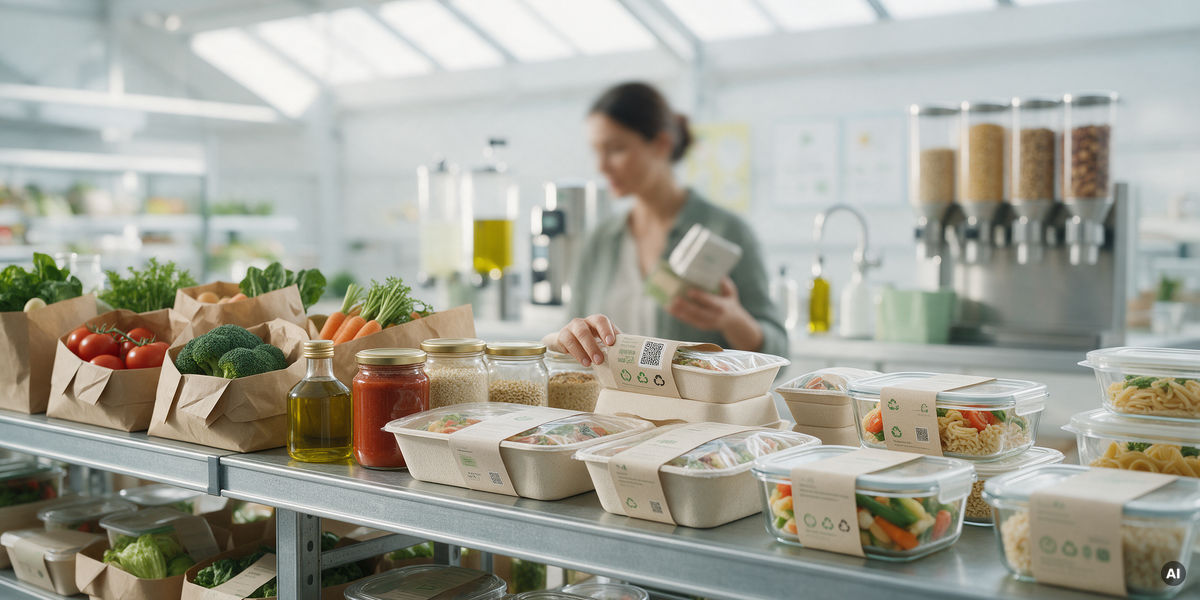
Whether it’s tomatoes in plastic trays, avocados in mesh bags, or bell peppers sealed in plastic wrap: packaging often ends up directly in the trash. The EU Packaging Regulation (Regulation (EU) 2025/40) is intended to ensure that food packaging contains fewer harmful substances, is recycled more, and strengthens the circular economy. The new rules have been in effect since August 12, 2026—albeit with long transition periods in some cases. For consumers, this means, among other things: less packaging waste, standardized guidelines for waste separation, sustainable refill options, and stricter limits for substances that come into contact with food. TÜV SÜD provides an overview.
The European Union’s so-called “PPWR” (Packaging and Packaging Waste Regulation) replaces the previous EU Packaging Directive from 1994. Many of the regulation’s requirements will take effect only after transition periods and will become effective by 2040 at the latest. National supplementary laws govern enforcement, responsibilities, and fines in EU countries. In Germany, this is ensured by the Packaging Law Implementation Act (VerpackDG), which entered into force on August 12, 2026. “Consumers will gradually notice the changes in their everyday lives—particularly in the areas of packaging materials, waste separation, and when shopping at the supermarket,” says Dr. Andreas Daxenberger, a food expert at TÜV SÜD, assessing the impact on consumers.
Packaging Materials: Stricter Limits for “Forever Chemicals”
The new limits for so-called “forever chemicals” (PFAS) are particularly relevant to food safety. If packaging comes into contact with food, it may now contain these persistent industrial chemicals only in very strictly limited quantities. Stricter restrictions also apply to heavy metals such as lead, cadmium, and mercury. The new regulations are intended to help ensure that as few undesirable substances as possible migrate from the packaging into the environment or into food. As a result, for example, hamburger boxes, snack packaging, frozen food trays, and bakery cartons may no longer be treated with the grease- and water-repellent coatings that were previously common. “In the interest of food safety, consumers benefit from the stricter limits on substances of concern,” said Dr. Daxenberger.
Greater Consumer Protection: No More Unnecessary Empty Space
Starting in February 2028, retail packaging must limit its empty space to the bare minimum. This means that, in the future, packaging designed solely to make a product appear larger will be prohibited. However, since not all empty space in packaging constitutes deception, a certain amount of empty space remains permitted to protect the product or to maintain protective gases that preserve freshness; double bottoms, unnecessary layers, or double walls, however, will be prohibited starting in January 2030.
Accelerated Resource Conservation: Better Conditions for the Circular Economy
A key objective of the regulation is to reduce the overall volume of packaging and keep recyclable materials in the cycle for as long as possible. To this end, specific quotas have been set for each EU country. At the same time, regulations regarding minimum percentages of recyclable materials apply to packaging. Starting in August 2028, consumers will be able to better understand the material composition of packaging: Packaging must then bear clearly legible information on material composition, in some cases supplemented by digital information via a QR code.
“Recently, coffee capsules, coffee pods, and tea bags have also been classified as packaging. This means that manufacturers must comply with all sustainability requirements and obligations just as they do for other packaging formats,” says Dr. Daxenberger, describing further changes. However, since they are considered compostable, they must also comply with composting standards starting next February. This also includes stickers on fruits and vegetables. For coffee capsules, there are special rules that prioritize recyclability. In addition, certain single-use plastic packaging will be banned, such as for fresh fruits and vegetables weighing less than 1.5 kilograms, as well as for food and beverages consumed on-site in the hospitality industry.
Simpler Waste Separation
Proper waste separation increases the recycling rate and keeps recyclable materials in the value chain longer. To ensure that waste separation is successful throughout the EU in the future, there will be standardized symbols on waste bins—whether in Germany, Italy, or Spain. “This puts an end to the guesswork on vacation about what goes in which bin—at least within the EU,” says Dr. Daxenberger.
At the supermarket: Bulk buy stations and deposit-return systems
There will also be significant changes across the EU regarding beverage packaging. Starting in 2029, member states must offer deposit and return systems for single-use plastic beverage bottles as well as for metal beverage cans and containers with a capacity of up to three liters.
There will also be noticeable changes in German supermarkets: Starting in 2030, retail outlets larger than 400 square meters must dedicate at least 10 percent of their floor space to refill stations—for food, liquids, or non-food products—where customers can refill their own containers to prevent unnecessary waste. “The concept of zero-waste stores has so far been a niche topic in the German retail sector. This requirement will force large retailers to rethink their approach to some extent,” Daxenberger notes.
A Challenge for Manufacturers and Retailers
The requirements of the PPWR and the Packaging Law Implementation Act present major challenges for the packaging industry and retailers regarding documentation obligations and legally compliant implementation. In addition, the packaging industry is called upon to develop innovative products with the necessary properties while complying with the PPWR. “In common food standards such as BRCGS, IFS, or FSSC 22000, auditors will, in accordance with the new legal requirements, pay particular attention to the company’s fundamental awareness of the new requirements and, specifically, to the conformity of packaging with regard to food safety. In particular, contaminant limits and the implementation plan will play a key role effective immediately,” says Dr. Daxenberger, offering insights into audit practice.
For companies, TÜV SÜD offers not only food certifications but also specialized services related to PPWR compliance—ranging from readiness assessments and packaging inspections to compliance planning.
Note: This article has been translated using a computer system without human intervention. LUMITOS offers these automatic translations to present a wider range of current news. Since this article has been translated with automatic translation, it is possible that it contains errors in vocabulary, syntax or grammar. The original article in German can be found here.



Other news from the department politics & laws











Most read news











More news from our other portals
























See the theme worlds for related content
Topic world Food safety
Food safety is at the heart of the food and beverage industry. It ensures that the food we eat every day is not only nutritious, but also free of harmful contaminants. From field to plate, the industry monitors and regulates every step of the process with strict quality controls, advanced testing methods and continuous research.

Topic world Food safety
Food safety is at the heart of the food and beverage industry. It ensures that the food we eat every day is not only nutritious, but also free of harmful contaminants. From field to plate, the industry monitors and regulates every step of the process with strict quality controls, advanced testing methods and continuous research.