Food Industry Associations Reject New Taxes
More than 40 associations—ranging from bakers to beverage manufacturers—are warning of a new wave of costs and red tape
Advertisement


The German food industry is calling for a halt to the planned sugar and plastic taxes and is warning of a new wave of costs and bureaucracy. More than 40 food industry associations, including the Federal Association of the German Food Industry (BVE), the German Farmers’ Association (DBV), and the Central Association of German Bakers, have published a joint statement.
Sugar Tax and Plastic Tax: Food Industry Calls for a Halt and Warns of a New Wave of Costs and Bureaucracy
The German food industry is disappointed with the federal government’s course of action. Instead of easing the burden on businesses, reducing bureaucracy, and facilitating investment in Germany, the federal government is planning two new taxes—the sugar tax and the plastic tax—which will entail significant additional costs and bureaucratic obligations.

The undersigned associations fundamentally reject both tax proposals! It is particularly troubling that the Federal Ministry of Finance is pushing these proposals through with great haste without adequately involving the affected industries or sufficiently considering the impact on the European single market. The compliance costs for both the business community and the administration, as stated in the legal texts, are significantly higher than indicated for both legislative proposals.
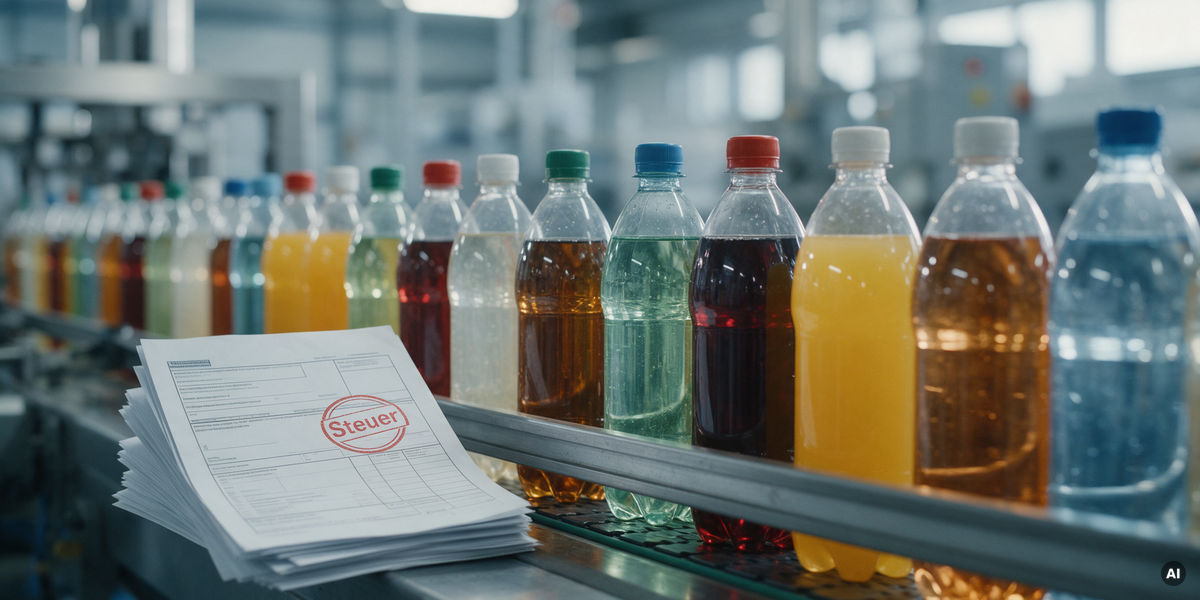
The problem becomes particularly clear in the case of the planned sugar tax on soft drinks: By proposing a tax warehouse system modeled after the beer tax, the Federal Ministry of Finance is relying on an extremely cumbersome collection model. Instead of utilizing existing business processes and exploring digital, low-bureaucracy alternatives, companies are expected to create new tax administration structures and make significant investments in adapting their production and inventory management systems. Many production facilities are not designed for such procedures. In addition, there are significant practical difficulties: In the food and beverage industry, raw materials, production facilities, and storage capacities are often used for both taxable and non-taxable products. Additional tax-related control, documentation, and, where applicable, approval procedures threaten to directly disrupt well-established production processes. They complicate production planning, incur additional costs, and limit companies’ flexibility.
The planned plastic tax would also place an additional burden on an industry that already complies with extensive and costly obligations in the packaging sector. The Packaging Act, participation in dual systems, the single-use plastic fund levy, and the new requirements of the European Packaging Regulation present companies with significant financial and organizational challenges. An additional national tax would increase these burdens without providing any additional environmental benefits. At the same time, it threatens to create competitive disadvantages for Germany as a production location.
Both proposals are therefore fundamentally at odds with the federal government’s stated goals. Those who promise to reduce bureaucracy, boost competitiveness, and encourage investment must not simultaneously introduce new taxes with complex administrative procedures. The food industry, which consists predominantly of small and medium-sized enterprises, needs planning certainty, competitive framework conditions, and less bureaucracy rather than more regulation.
We therefore urge you to advocate for halting both tax proposals and to fully involve the affected sectors of the economy in any further legislative decisions. Regardless of our fundamental opposition, the proposed tax warehousing procedure for the sugar-sweetened beverage tax must be abandoned in particular. For both proposals, the economic consequences, the additional bureaucratic costs, and the impact on the European single market must be carefully examined.
The food industry associations stand ready to contribute their practical expertise to a constructive dialogue. A prerequisite for this is that the federal government does not present the affected companies with a fait accompli, but rather takes their experiences and proposals seriously into account.
Signatories
• Employers’ Association for Food and Beverages e.V.
• Working Group of German Beet Growers’ Associations (ADR)
• Federal Committee for Fruits and Vegetables (BOG)
• Federal Association of the German Spirits Industry and Importers e.V.
• Federal Association of the German Confectionery Industry e.V.
• Federal Association of Wholesale, Foreign Trade, and Services e.V.
• Federal Association of the Fruit, Vegetable, and Potato Processing Industry e.V.
• Federal Association of Chain Restaurants (BdS)
• Federal Association of Fruit and Vegetable Producer Organizations
• Federal Association of German Beverage Wholesalers e.V.
• Federal Association of German Sausage and Ham Producers
• Federal Association of the German Food Industry
• The Baking Ingredients Association
• German Farmers’ Association
• German Brewers’ Association
• German Butchers’ Association
• German Hotel and Restaurant Association
• German Coffee Association e.V.
• German Confectioners’ Association
• German Raiffeisen Association, Inc.
• German Frozen Foods Institute, Inc.
• Family-Owned Agricultural and Forestry Businesses Association
• Kulinaria Germany e.V.
• German Food Association, Inc.
• German Dairy Industry Association
• OVID Association of the Oilseed Processing Industry in Germany e.V.
• Private Breweries of Germany
• Private Mills Germany
• Sweeteners Association e.V.
• Association of German Mineral Water Producers, Inc.
• Association of the German Fruit Juice Industry e.V.
• Association of German Beverage Retailers e.V.
• Association of German Large-Scale Bakeries
• Meat Industry Association
• Association of the Grain, Milling, and Starch Industry e.V.
• Association of the Sugar Industry
• Trade Association for Non-Alcoholic Beverages
• Economic Association of the Sugar Industry
• Central Association of German Bakers
• Central Association of the German Poultry Industry
• Central Association of the German Advertising Industry
• Central Association of Horticulture (ZVG)
Note: This article has been translated using a computer system without human intervention. LUMITOS offers these automatic translations to present a wider range of current news. Since this article has been translated with automatic translation, it is possible that it contains errors in vocabulary, syntax or grammar. The original article in German can be found here.


Other news from the department politics & laws