More Packaging Waste Instead of Less: Discount Stores Fail the DUH Test
After five years, the average rate of reusable beverage containers offered by supermarkets and discount stores stands at just 30.5 percent.
No significant improvement in the packaging offerings of the twelve supermarket, discount, and organic supermarket chains surveyed; Aldi Nord and Aldi Süd have ranked last for the past five years; Bio Company and Denns show the most significant positive developments DUH calls on Environment Minister Schneider to implement ambitious financial incentives for reusable packaging as well as reusable packaging quotas for wine, milk, and other food items such as oil, vinegar, and spreads

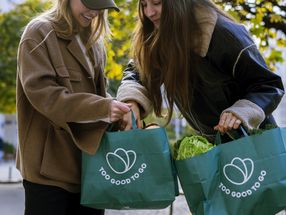
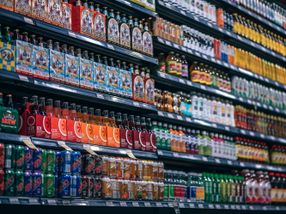
Illustrative image
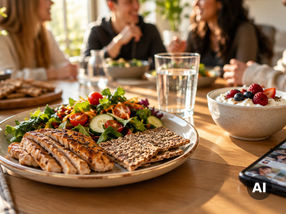
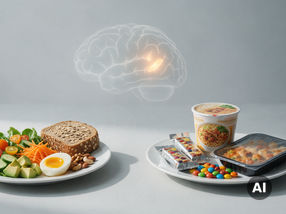
AI-generated image
The packaging review by Deutsche Umwelthilfe (DUH) shows that, after five years, a comprehensive shift away from packaging in the German food retail sector has not materialized—in some cases, even more packaging is used today than five years ago. While the organic supermarkets surveyed continue to score well with high rates of reusable packaging and comparatively little packaged fruit and vegetables, discounters in particular still rely predominantly on single-use packaging and, in some cases, even offer more packaged fruit and vegetables. Aldi Nord and Aldi Süd have been at the bottom of the rankings since the DUH packaging assessment began. Lidl, Penny, Norma, and Netto Marken-Discount have also consistently received red cards over the entire five-year period. Rewe and Edeka, as in previous years, received a yellow card. Kaufland received a yellow card in the overall results for the first time this year—in part due to new reusable options at cheese and deli counters as well as for hot beverages. However, according to the DUH, none of the conventional retail chains has shown a fundamental shift away from the single-use model.
Barbara Metz, Federal Executive Director of the DUH: “After five years of the Packaging Check, our assessment is sobering: Single-use bottles, cans, and unnecessarily pre-packaged foods still dominate the shelves of large supermarkets and discounters. At traditional supermarkets and discounters, the average rate of reusable options for beverages—at 30.5 percent—remains far below the statutory target of 70 percent. Aldi and Lidl, in particular, continue to deny their customers any choice and do not offer beverages in reusable bottles. Given five years of stagnation, Environment Minister Schneider must urgently establish effective regulations. What is needed is ambitious, binding, and financially supported promotion of reusable systems—funded by manufacturers of single-use packaging—as well as a fee of at least 20 cents on single-use beverage containers and beverage cartons subject to a deposit. “The federal government must no longer leave the promotion of reusable packaging largely up to the companies themselves.”
The trend in packaging levels for fruits and vegetables is particularly negative. At most of the retail chains surveyed, there are now more pre-packaged goods on the shelves than there were at the start of the DUH packaging audit. At Lidl and Rewe, the proportion rose by about ten percentage points compared to the first year of the study, to 66 and 56 percent, respectively; at Netto Marken-Discount, it rose by as much as 16 percentage points to 74 percent. Organic supermarkets have also seen slight setbacks in this area, but with an average of 16 percent prepackaged fruits and vegetables, they remain well below the levels of traditional supermarkets and discounters.
Elena Schägg, Deputy Director of the DUH for the Circular Economy: “Bio Company and Denns show that retailers can gradually improve their packaging offerings. The organic supermarkets also demonstrate that reusable packaging doesn’t have to be limited to water, beer, or juice: Wine, oil, and vinegar can also be sold in reusable bottles. This is exactly the kind of selection we finally need on a broad scale. This makes it all the more problematic that, of all things, when it comes to pre-packaged fruits and vegetables, many retailers are in a worse position today than they were five years ago. Starting in 2030, supermarkets will no longer be allowed to package fruits and vegetables in plastic—and today, supermarkets are still miles away from meeting that requirement. In our test, 99 percent of the packaged carrots were shrink-wrapped in plastic. The availability of reusable containers is also declining overall when it comes to yogurt. Supermarkets urgently need to prepare for the upcoming regulations. In addition, further incentives are needed, such as mandatory reusable packaging quotas for milk and wine, as well as for other pre-packaged foods like oil, vinegar, spreads, and canned fruits and vegetables."
Background:
For the fifth DUH Packaging Check, 48 stores from twelve major supermarket, discount, and organic supermarket chains were randomly sampled and examined between April and August 2026: Aldi Nord, Aldi Süd, Lidl, Penny, Netto Marken-Discount, Norma, Rewe, Edeka, Kaufland, Alnatura, Denns, and Bio Company. The assessment covered, among other things, the beverage, fruit, and vegetable sections, as well as fresh milk, yogurt, and the fresh food and self-service counters. The results were rated in the respective product categories using the colors red (poor), yellow (fair), and green (good), and combined into an overall rating. With this year’s test, the DUH is taking stock of five years of the “Packaging Check” for the first time, focusing in particular on how the retail chains’ offerings have evolved since the study began.
Note: This article has been translated using a computer system without human intervention. LUMITOS offers these automatic translations to present a wider range of current news. Since this article has been translated with automatic translation, it is possible that it contains errors in vocabulary, syntax or grammar. The original article in German can be found here.

Other news from the department politics & laws