BUND Research Shows: Wild Boars in Large Parts of Germany Are Contaminated with PFAS
All 114 liver samples significantly exceeded the legally permissible maximum levels for PFAS

Advertisement


Meat samples also affected: Limit values exceeded in 12 percent of cases; high levels indicate PFAS contamination in soil and water; BUND calls for restrictions on the production and use of PFAS
The German Association for the Environment and Nature Conservation (BUND) requested data from authorities in all federal states regarding PFAS (per- and polyfluoroalkyl substances) contamination in wild boar meat and liver. All 114 liver samples analyzed by the authorities significantly exceeded the legally permissible maximum levels for PFAS. The limit values were also exceeded in over 12 percent of the total 152 meat samples analyzed.
The measured concentrations show that PFAS have long since spread throughout ecosystems and are accumulating in wild animals. The findings are also cause for concern from a health perspective: In half of the meat samples, the PFAS concentration was so high that long-term health effects cannot be ruled out with regular, weekly consumption. Wild boar liver should not be consumed at all. BUND is calling for far-reaching restrictions on the production and use of PFAS.
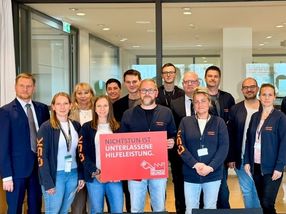
Olaf Bandt, Chair of BUND: “If even wild animals in Germany are contaminated with these ‘forever chemicals,’ it shows just how widespread PFAS have become in our environment. The PFAS contamination in wild boars highlights the extent of environmental pollution.”
The data from the meat samples comes from Baden-Württemberg, Bavaria, Hesse, Lower Saxony, North Rhine-Westphalia, Rhineland-Palatinate, and Saxony. The data on wild boar livers was provided by the authorities in Bavaria, Hesse, Rhineland-Palatinate, and Schleswig-Holstein. It is particularly alarming that the contamination is not limited to individual known sources of pollutants but is likely attributable in many places to background concentrations in soil, water, and food chains.
The results also show that PFAS contamination is no longer high only at individual so-called hotspots, but that even relatively pristine habitats are affected. The study thus confirms the findings of two recent investigations by the Federal Environment Agency, which demonstrate widespread PFAS contamination of wildlife and soils.
The EU-wide restriction of PFAS chemicals is currently at a critical stage. Later this year, the committees of the European Chemicals Agency (ECHA) will present their recommendations. After that, it will be up to the European Commission and the member states to pave the way for effective regulation of these “forever chemicals.” BUND calls for far-reaching restrictions on the production and use of these “forever chemicals.” Temporary exemptions should only be granted where suitable alternatives are not yet available for essential applications.
“With every release of PFAS into the environment, we are leaving future generations with an increasing health risk and endangering our ecosystems. We call on the German federal government and the European Commission to immediately halt further PFAS pollution. The production and use of these ‘forever chemicals’ must be comprehensively restricted,” said Bandt.
Note: This article has been translated using a computer system without human intervention. LUMITOS offers these automatic translations to present a wider range of current news. Since this article has been translated with automatic translation, it is possible that it contains errors in vocabulary, syntax or grammar. The original article in German can be found here.



Other news from the department politics & laws













Most read news











More news from our other portals

























See the theme worlds for related content
Topic world Food safety
Food safety is at the heart of the food and beverage industry. It ensures that the food we eat every day is not only nutritious, but also free of harmful contaminants. From field to plate, the industry monitors and regulates every step of the process with strict quality controls, advanced testing methods and continuous research.

Topic world Food safety
Food safety is at the heart of the food and beverage industry. It ensures that the food we eat every day is not only nutritious, but also free of harmful contaminants. From field to plate, the industry monitors and regulates every step of the process with strict quality controls, advanced testing methods and continuous research.