Most Gen Z say climate change is caused by humans but few recognize the climate impact of meat consumption
Generation Z – those born after 1995 – overwhelmingly believe that climate change is being caused by humans and activities like the burning of fossil fuels, deforestation and waste. But only a third understand how livestock and meat consumption are contributing to emissions, a new study by the University of Sydney and Curtin University researchers has revealed.

computer generated picture
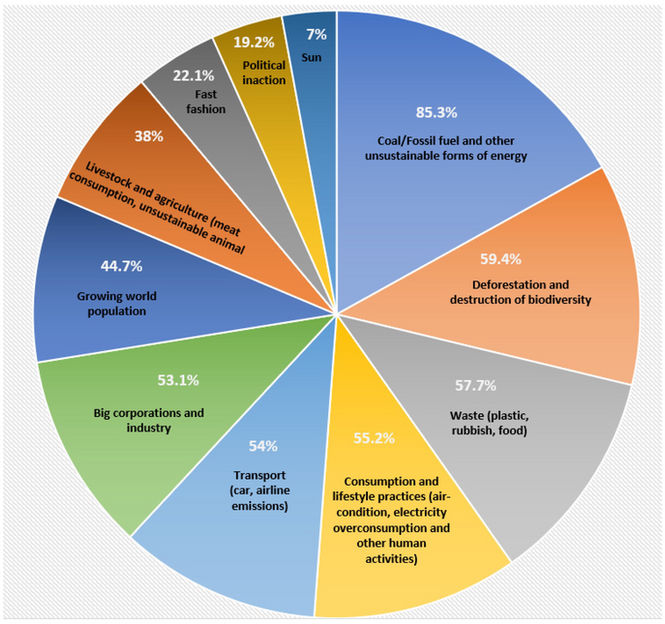
Survey demonstrating Gen Z's perceptions of climate change drivers
Dr Diana Bogueva, Professor Dora Marinova

The researchers say this result comes despite estimates that over a quarter of the world’s emissions are linked to meat and livestock production, calling for greater awareness among young people.
Led by Dr Diana Bogueva in the Centre for Advanced Food Engineering and School of Chemical and Biomolecular Engineering at the University of Sydney, the researchers conducted an online survey of Australian participants between the ages of 18 and 26 in Sydney, Melbourne, Brisbane, Perth, Canberra and Adelaide.

Participants were asked about the main contributors to climate change. Overwhelmingly, 85 percent stated that coal, fossil fuels and other unsustainable forms of energy contributed the most. This was followed by deforestation and biodiversity loss (59 percent), plastic, rubbish and food waste (58 percent), consumption and lifestyle practices – such as goods and services (55 percent), transport (54 percent), large industry (53 percent) and global population growth (45 percent).
Although almost two-thirds nominated deforestation as the main contributor to climate change, just over a third (38 percent) believed livestock and agriculture (including meat consumption and unsustainable animal farming practices) to be the main contributor.
The United Nations has estimated that agricultural production has driven almost 90 percent of the world’s deforestation. Other sources estimate three-quarters of deforestation is driven by agriculture, with most production coming from the beef, palm oil, soy and logging industries.
“Young people will be most impacted by climate change, and already they are paying the price for historic emissions,” said lead researcher Dr Diana Bogueva.
“A steep reduction in emissions will be required to curb climate change, so it is vital our future decision-makers understand which activities contribute most and make informed choices.”
The study also found that Generation Z does not generally engage with food provenance (where their food originates from) and most do not pay attention to food labelling.
Dr Bogueva said: “There is a clear disconnect at play – while global warming is high on the Gen Z radar, the nexus between climate change and food is yet to be properly understood by young Australians.”
Professor Dora Marinova said: “A plant-based or flexitarian diet is a powerful way to curb emissions. All it requires is for someone to make a switch to more considered choices – and they can make that change today.”
“Without urgent changes to Generation Z’s food choices, now and in the future, meat consumption and livestock production will continue to drive global emissions, and I don’t think that’s a future young people want," said Dr Bogueva.
The research was published in MDPI Animals. Professor Marinova and Dr Bogueva recently published the book Food in a Planetary Emergency, which explores how global food production and consumption are impacting the environment and contributing to emissions, offering a positive, sustainable way forward.
Original publication

Other news from the department science