Standard Tests Do Not Always Detect All Gluten Residues in Barley Beer
New analytical method enables more accurate detection
Advertisement


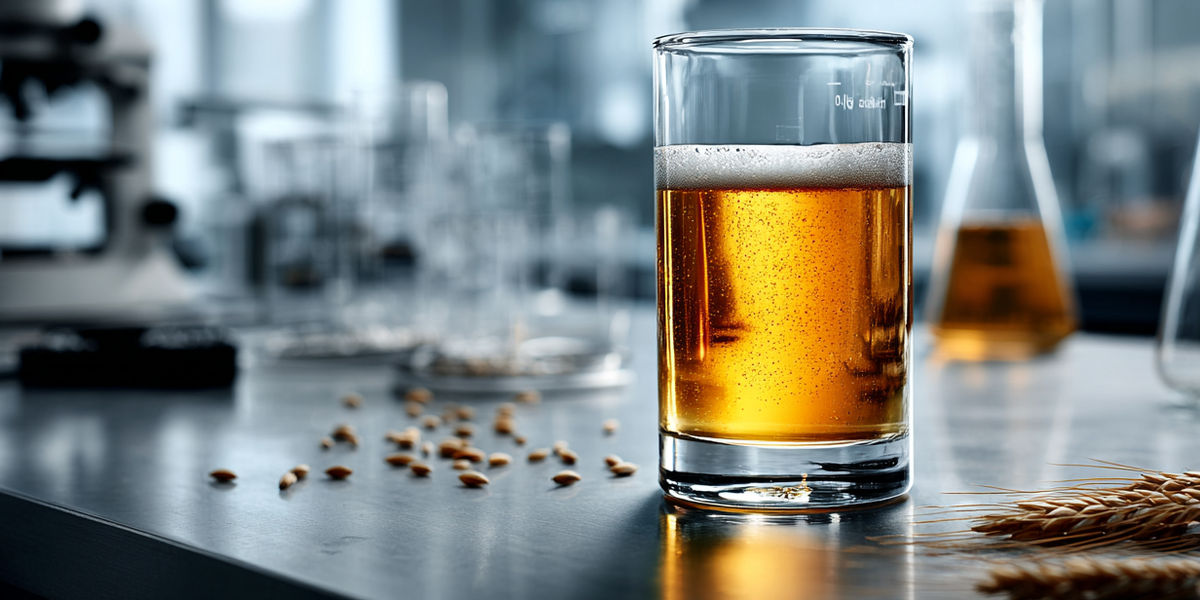
Some barley beers labeled as “gluten-free” contain small amounts of gluten residues that may trigger celiac disease, which are not detected by the standard antibody-based tests currently in use. This is the conclusion of a study by the Leibniz Institute for Food Systems Biology at the Technical University of Munich. In the study, researchers compared two antibody-based testing methods with a mass spectrometric detection method newly developed at the Institute. The study results show that modern food analytical methods could help further improve the safety of gluten-free products in the future.
Gluten is a collective term for certain proteins found in wheat, rye, and barley. In the EU and according to the international guidelines of the Codex Alimentarius, a food is officially considered “gluten-free” if its gluten concentration is no more than 20 milligrams per kilogram. This limit is set so that most people with celiac disease can tolerate “gluten-free” foods without experiencing symptoms. Celiac disease is a chronic autoimmune disorder of the small intestine in which the body reacts with hypersensitivity to gluten.
Barley beer also naturally contains gluten. To produce gluten-free barley beers, breweries employ various methods. They then use standardized testing procedures to verify whether the beers comply with the legally established gluten limit. These procedures typically involve so-called enzyme-linked immunosorbent assays (ELISA), which detect gluten residues using antibodies. These residues are immunogenic protein fragments (peptides) that are produced, for example, during the enzymatic breakdown of gluten.
New analytical method enables more accurate detection
To verify the accuracy of such standard tests, the research team around principal investigator Katharina Scherf and first author Eleonora Tissen examined four beers containing gluten and 21 gluten-free barley beers. In addition to two established ELISA methods, the researchers used a newly developed method of nano-liquid chromatography-tandem mass spectrometry (nanoLC-MS/MS), which makes it possible to specifically identify celiac disease-active peptides.
The study results show clear differences between the three different detection methods: For example, the G12-ELISA confirmed gluten concentrations below 20 milligrams per kilogram in all beers labeled as “gluten-free.” The R5-ELISA, on the other hand, detected concentrations in four of these beers that slightly exceeded the EU limit. Using the mass spectrometry method, the team also identified a total of 44 peptides that, according to the literature, can trigger celiac disease due to their molecular structure, 29 of which were found in “gluten-free” beers. Seventeen of the 44 celiac-active peptides had a structure that the ELISA antibodies currently in use cannot detect.
Further research needed
“Our results mean that gluten-free barley beers are generally safe. However, they also show that there can be discrepancies between antibody tests and that they do not detect all celiac-active peptides known from the literature,” says Eleonora Tissen, who completed her doctoral studies in Katharina Scherf’s research group. Principal investigator Katharina Scherf adds: “Whether the peptides we additionally identified actually trigger health-relevant reactions cannot yet be conclusively assessed. The good news is that their concentrations were very low and below the EU limit.”
According to the researchers, further investigations are needed. Only then can the potential risk for people with celiac disease be reliably assessed. “In the long term, the combination of established rapid tests and modern mass spectrometry methods could make gluten-free foods even safer. In any case, our study is already providing important impetus for the further development of analytical methods,” says Katharina Scherf, who heads the research group Food Biopolymer Chemistry at the Leibniz Institute.
Original publication
Eleonora Tissen, Sabrina Geisslitz, Barbara Maier, Katharina Anne Scherf; "Identification of celiac disease-active peptides in gluten-free barley beers by nanoLC-MS/MS"; Applied Food Research, Volume 6
Eleonora Tissen, Sabrina Geisslitz, Katharina Anne Scherf; "Absolute quantitation of celiac disease-active gluten peptides in gluten-free barley beer by targeted nanoLC-MS/MS"; Food Research International, Volume 222



Other news from the department science















Most read news










More news from our other portals























See the theme worlds for related content
Topic World Food Analytics
Food analysis methods enable us to investigate the quality, safety and composition of our food. Whether in the traceability of food, the detection of contaminants or the verification of nutritional information - food analytics plays a crucial role in our health and nutrition. Welcome to the exciting world of food analytics!

Topic World Food Analytics
Food analysis methods enable us to investigate the quality, safety and composition of our food. Whether in the traceability of food, the detection of contaminants or the verification of nutritional information - food analytics plays a crucial role in our health and nutrition. Welcome to the exciting world of food analytics!
Topic world Food safety
Food safety is at the heart of the food and beverage industry. It ensures that the food we eat every day is not only nutritious, but also free of harmful contaminants. From field to plate, the industry monitors and regulates every step of the process with strict quality controls, advanced testing methods and continuous research.

Topic world Food safety
Food safety is at the heart of the food and beverage industry. It ensures that the food we eat every day is not only nutritious, but also free of harmful contaminants. From field to plate, the industry monitors and regulates every step of the process with strict quality controls, advanced testing methods and continuous research.