Organic Onion Farming: Selected heirloom varieties match the quality of hybrids
Two open-pollinated varieties stand out in particular—even in terms of storage and nitrogen uptake
Advertisement


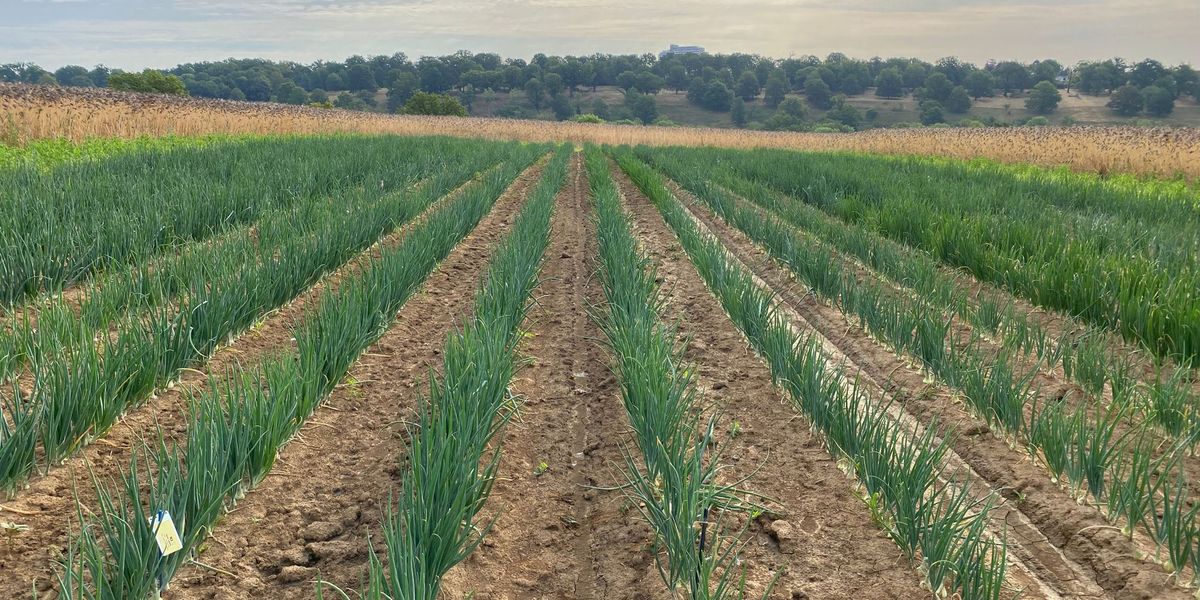
In organic onion cultivation, old, open-pollinated land varieties such as “Stunova” and “Birnenförmige” can compete with the hybrid varieties that are predominantly used today. They can keep pace with hybrid varieties in terms of both yield and nutrient content, and in some cases even outperform them in other characteristics, such as nitrogen uptake. This was discovered by researchers at the Max Rubner Institute and the University of Hohenheim as part of the project “Onion Landraces for Organic Farming” (ZwiebÖL).
In multi-year cultivation trials on experimental and field plots at various locations, many land varieties achieved yields under organic conditions that were, on average, comparable to those of current hybrid varieties. In particular, the “Stunova” variety consistently yielded high yields in the trials, while the Franconian landrace “Birnenförmige” not only produced good yields but also exhibited a favorable nutritional profile. In addition, the variety impressed with early maturity, above-average storage life, and better nitrogen uptake compared to the hybrids.
General Interest in Open-Pollinated Varieties In a survey of 112 conventional and organic farms that grow onions, three-quarters of respondents stated that they use exclusively hybrid varieties. Only the organic farms surveyed also used open-pollinated landraces. Surprisingly, most participants indicated that they were generally interested in open-pollinated varieties. According to the researchers’ assessment, the survey results suggest that, in addition to the lack of seed availability, a lack of growing experience could also be a major reason for the limited adoption of open-pollinated varieties. In the project, the researchers focused on intensive dialogue with commercial farms and the broad dissemination of the findings through numerous informational events. To rebuild the necessary expertise in growing open-pollinated varieties, the research team believes that further studies on the cultivation, quality, and storage potential of selected open-pollinated varieties are warranted.

Background In 2025, nearly 2,000 farms in Germany cultivated table onions on an area of approximately 20,000 hectares. About 11 percent of this area was farmed organically. The use of conventional hybrid seed is also widespread in organic farming. A main reason is the lack of availability of seed for open-pollinated varieties. Another reason is the insufficient knowledge to date regarding the advantages and disadvantages of open-pollinated onion varieties.
The Federal Ministry of Agriculture, Food, and Home Affairs (BMLEH) has funded the project “Onion Landraces for Organic Farming” (ZwiebÖL) through the Federal Program for Organic Farming (BÖL), with the Federal Office for Agriculture and Food (BLE) overseeing the work as the project sponsor.
Note: This article has been translated using a computer system without human intervention. LUMITOS offers these automatic translations to present a wider range of current news. Since this article has been translated with automatic translation, it is possible that it contains errors in vocabulary, syntax or grammar. The original article in German can be found here.



Other news from the department science