Less Food Waste—and New Questions for Research
Simply tracking food waste can change behavior
In the DiFo 2.0 research project, households reported significantly less avoidable food waste. At the same time, the study shows how difficult it is to clearly attribute behavioral changes to individual, short-term measures
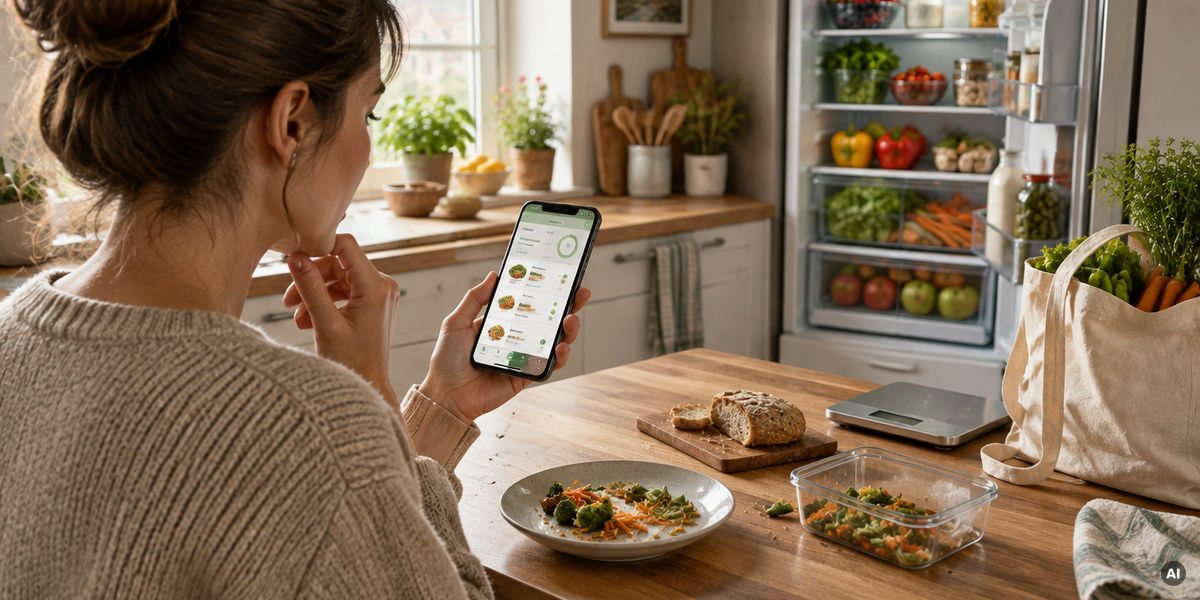
Food waste in private households can be significantly reduced, but it is more difficult to determine which measures are actually effective. In the research project “Dialogforum private Haushalte 2.0” (DiFo 2.0) conducted by the Technical University of Berlin and Slow Food Deutschland e. V., households tracked their food waste using a digital kitchen diary in the “Zu gut für die Tonne!” app. The results show a significant decrease in avoidable waste—but also that one-time psychological prompts alone are not enough, and that even the method of measurement can influence behavior. The research project was funded by the Federal Ministry of Agriculture, Food, and Home Affairs (BMLEH).
In the “Miss mit!” phase of the project, 222 households documented their food waste in a total of 7,468 diary entries, each covering seven days before and seven days after a participatory campaign. The campaigns focused, among other things, on grocery planning, storage, shelf life, and using up leftovers. The average total amount documented fell from 83.9 to 70.5 grams per person per day—a decrease of 16.1 percent. The change was even more pronounced for avoidable food waste: here, the amount fell from 45.5 to 33.2 grams per person per day, a decrease of 27.1 percent. Unavoidable waste, such as bones or inedible peels, showed little change, however. By way of comparison: The new European reduction target calls for a 30 percent reduction in per capita food waste by 2030, across the retail sector, the restaurant industry, food service providers, and private households.
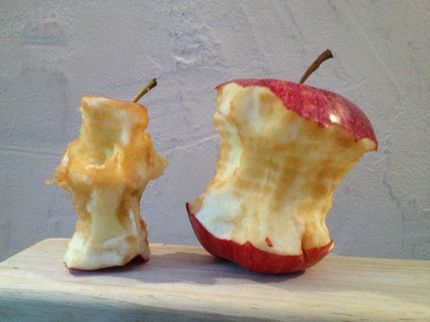
The observed declines in food waste are a clear finding of the project; however, due to the real-life laboratory design, it is not possible to determine unequivocally what role the campaign content, daily documentation, or other factors played in these changes. The daily recording of food waste itself may have led participants to become more aware of their waste and to change their behavior. The final survey also points to this: About 20 of the 51 respondents reported that recording their own waste quantities, reasons for disposal, or recurring patterns had made them more aware of these factors.
Brief psychological prompts show no additional effect In an additional randomized study with 420 participants, the research team tested two further approaches. Some participants reflected on situations in which they had thrown away food even though they had actually wanted to avoid doing so. Others formulated specific “if-then” plans for what they wanted to do differently in the future when shopping or portioning food; a third group combined both tasks. Compared to the control group, which received none of these additional interventions, none of the approaches led to a greater reduction in the food waste documented afterward. The results suggest that one-time psychological interventions under these conditions were not sufficient to further reduce food waste.
Reduction Instead of “Zero Waste” Another observation also puts simple “recipes for success” into perspective: Households with prior experience—who had already used the kitchen diary as part of a previous participatory campaign—were unable to sustain the initial decline to the same extent when they participated again. Their documented food waste was already at a lower level from the start and hardly decreased further over time. This suggests that when baseline levels are already low, the scope for further reductions is also smaller.
Together with the virtually unchanged proportion of unavoidable waste, this suggests that measures and communication should focus primarily on reducing avoidable food waste rather than setting an absolute “zero-waste” goal, the researchers concluded. Certain peels, pits, and other inedible parts could not be completely avoided. Furthermore, composting is not a form of food waste prevention, but rather a method of recycling food waste that has already been generated. Prevention starts earlier and prevents food waste from occurring in the first place. “Success does not mean that not a single gram is thrown away anymore. What matters is specifically reducing avoidable waste, realistically categorizing unavoidable components, and evaluating measures using robust methods,” says Prof. Dr. Nina Langen, head of the Department of Education for Sustainable Nutrition and Food Science at TU Berlin.
The amount of food discarded due to spoilage or mold decreased particularly significantly. The median fell from 7.14 to 4.10 grams per person per day. Storage, inventory management, and the timely use of available food could therefore be important starting points for future measures. However, to reliably identify such effects, how food waste is measured is crucial.
The kitchen diary also highlights the limitations of measurement Using the digital kitchen diary developed by the project team in close collaboration with the BMLEH, households record the type and amount of food discarded, the avoidable and unavoidable portions, and the reasons for disposal. In doing so, they can either weigh their waste or select preset quantities. The analysis shows that even the design of such an input form can influence the results: Nearly 30 percent of all entries corresponded exactly to one of the four quick-entry values offered—5, 15, 150, or 240 grams. Sensitivity analyses, however, revealed that the observed before-and-after differences cannot be explained solely by this input option. At the same time, the amounts documented by the households themselves were significantly lower than the official estimates for food waste in private households in Germany. Because different survey methods are used, the values cannot be directly compared. The difference, however, underscores how important it is to continue researching suitable measurement methods.
Key Questions for Food Waste Research “The kitchen diary shows us in great detail what is thrown away in households and why. At the same time, we see that the method of measurement itself can play a role. This is precisely where important questions for the next generation of food waste research arise,” says Nina Langen. Future studies should therefore examine individual behaviors and food groups in a more targeted manner, plan for longer measurement periods, and assess whether observed changes are sustained over time. Another question is what consumers actually perceive as food waste—for example, when food scraps are composted rather than disposed of in household trash.
The data collection was made possible through collaboration with five industry partners from the food production and retail sectors, as well as a B Corp-certified social impact company. Through their communication channels, households across Germany were reached. The digital kitchen diary in the BMLEH’s “Too Good for the Trash!” app will remain in use even after the project concludes: Three external partners continue to use the tool, and new participatory campaigns can be arranged through the “Too Good for the Trash!” initiative. The results of DiFo 2.0 thus not only provide insights into food waste prevention but also a methodological foundation for developing and evaluating future measures more reliably.
About the DiFo 2.0 Project The Private Households Dialogue Forum 2.0 is funded by the Federal Ministry of Agriculture, Food, and Home Affairs (BMLEH) as part of the National Strategy for Reducing Food Waste. It works closely with the BMLEH’s “Too Good for the Trash!” initiative. The project is administered by the Federal Office for Agriculture and Food (BLE) from October 2023 through September 2026. The Dialogue Forum is organized by Slow Food Germany in collaboration with the Department of Education for Sustainable Nutrition and Food Science at the Technical University of Berlin.
Note: This article has been translated using a computer system without human intervention. LUMITOS offers these automatic translations to present a wider range of current news. Since this article has been translated with automatic translation, it is possible that it contains errors in vocabulary, syntax or grammar. The original article in German can be found here.
Other news from the department science